deep purple
2025
Format 1: 132 x 202 cm / 52 x 79.5 in, edition of 6 + 2 AP
Format 2: 67 x 102 cm / 26.3 x 40.2 in, edition of 6 + 2 AP
Hybrid photography, archival pigment print, aludibond, diasec, custom-made wood / aluminium frame
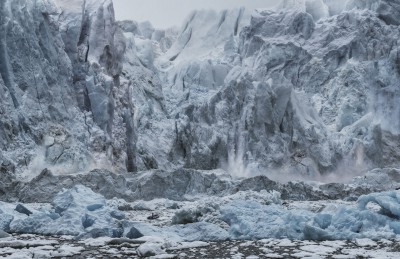
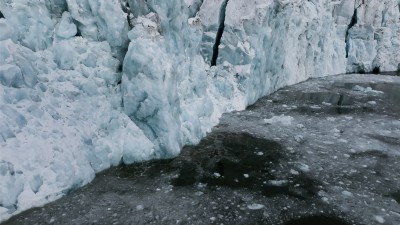
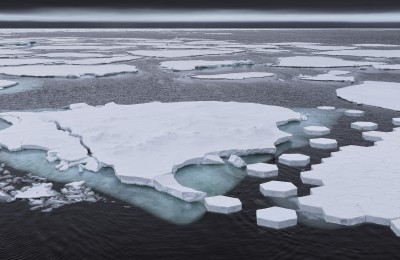
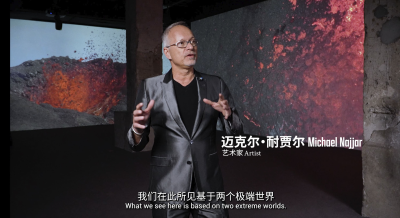
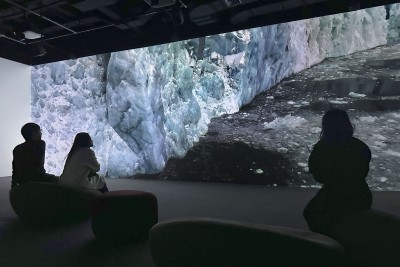
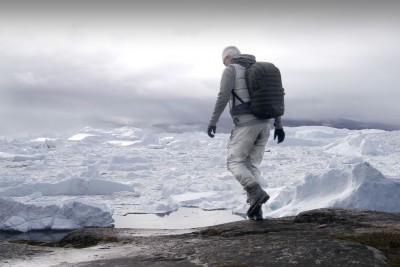
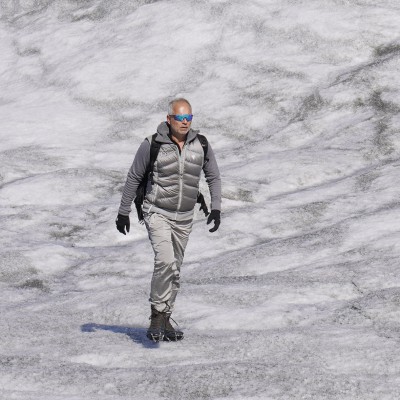
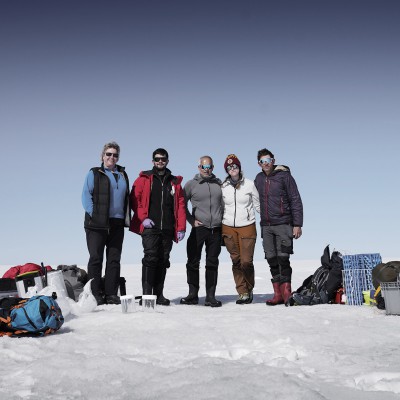
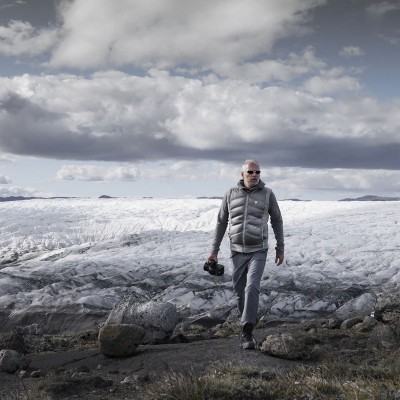
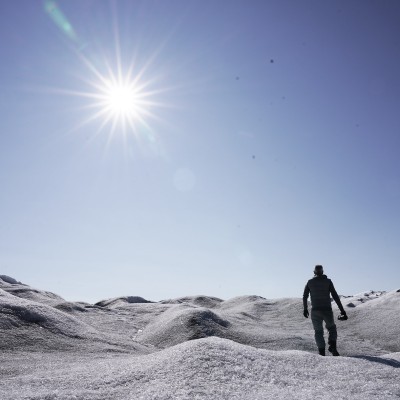
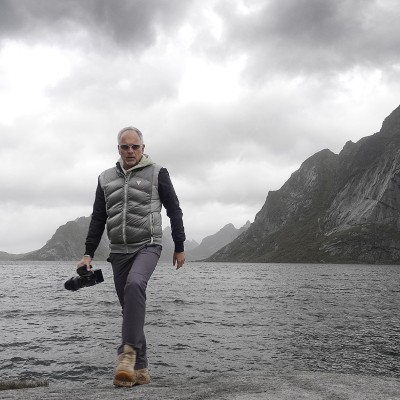
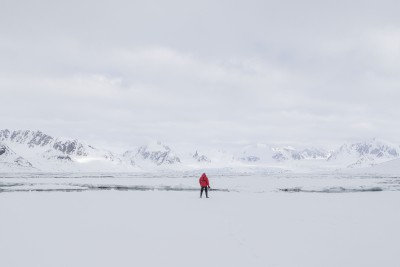
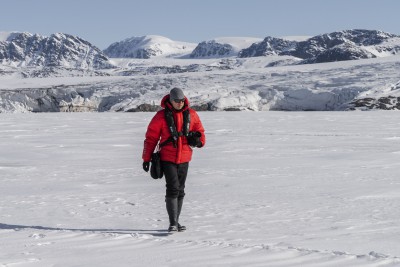
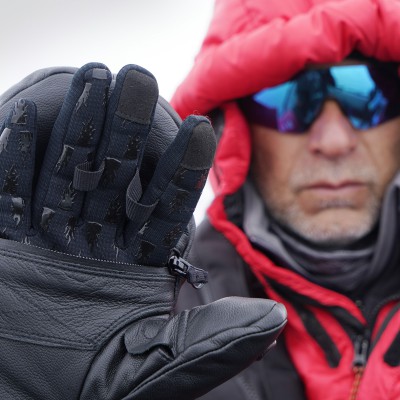
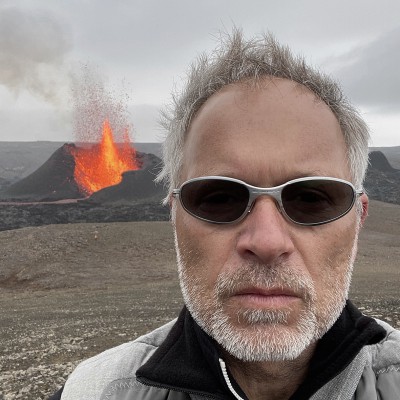
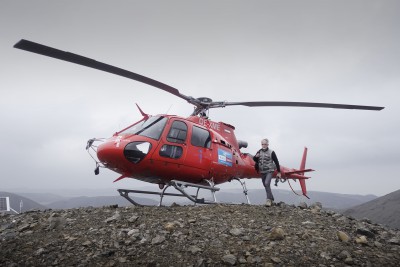
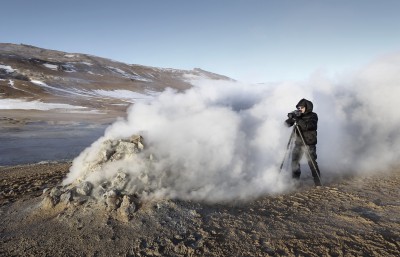
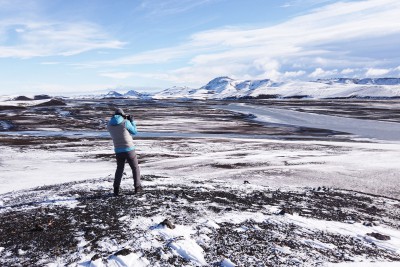
Climate change is omnipresent, dynamic, and visually perceptible. Ecologically, it manifests as a rapid process of kinetic transformation. This raises a fundamental question: How does this development take shape, and how do we visually respond to environmental changes? In recent years, the Greenland Ice Sheet has darkened due to global warming, taking on a greyish hue from the exponential growth of violet-pigmented ice algal blooms. This biological darkening reduces the ice surface’s reflectivity (albedo), accelerating melting and pushing the system toward a dangerous tipping point. Covering around 1.7 million square kilometres, the Greenland Ice Sheet acts as a vast reflector of solar energy, with its stability crucial for coastal cities worldwide. The European Research Council funded research project Deep Purple, co-lead by the GFZ Helmholtz Centre for Geosciences in Potsdam, Germany, and the University of Aarhus, Denmark, investigates this biological darkening. The findings are expected to significantly influence future climate models. As Arctic warming intensifies, the melting season lengthens, while algal blooms spread across the ice surface. Understanding these processes and quantifying Greenland’s contribution to global sea-level rise is increasingly urgent. Michael Najjar accompanied the GFZ / Aarhus team on a multi-week expedition, documenting the research and the landscape transformations through photos and video.
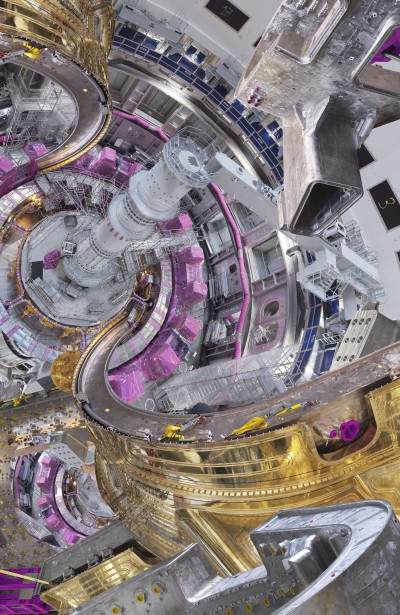
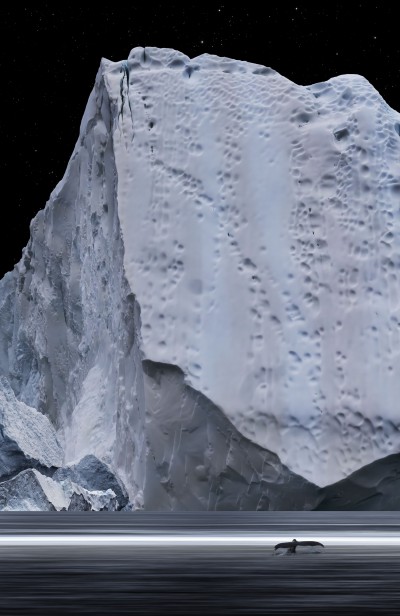
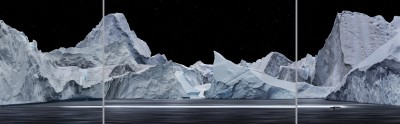
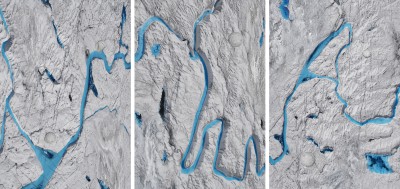
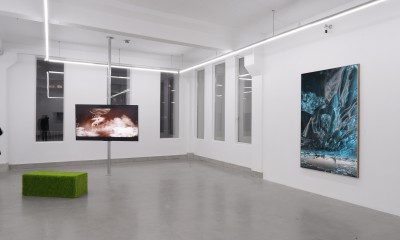
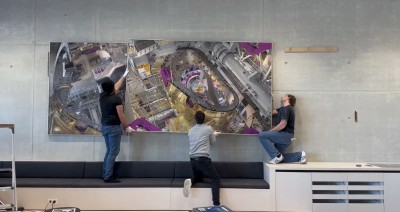
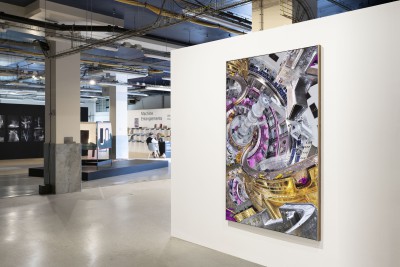
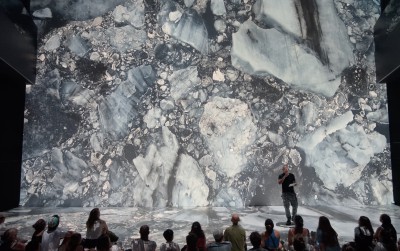
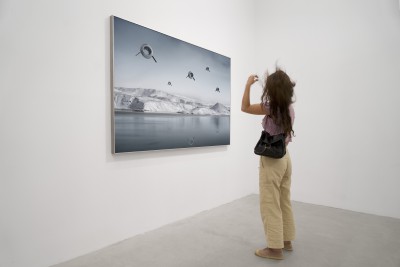
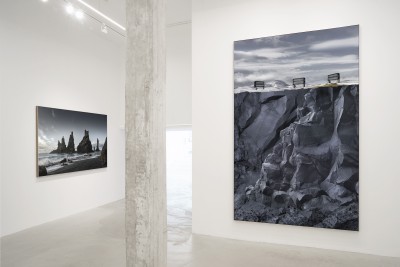
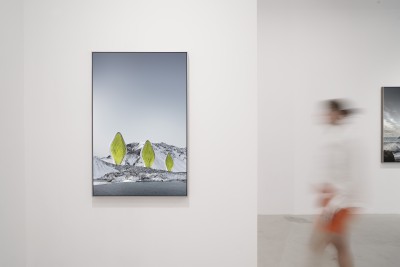
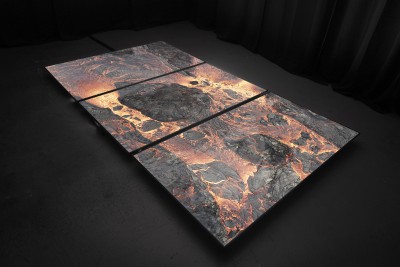
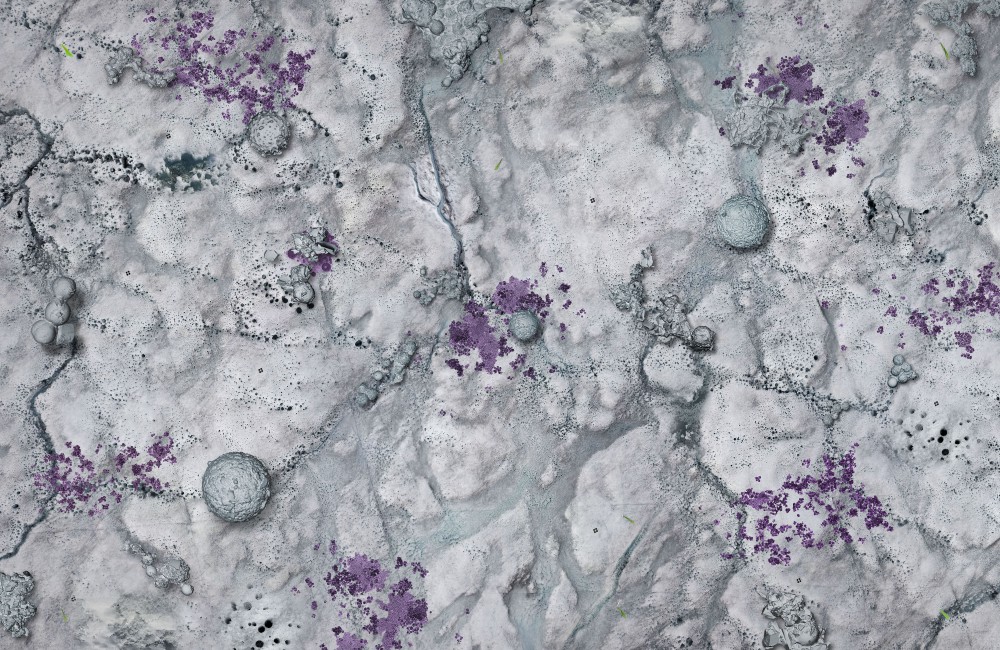
The artwork “deep purple” visualizes the kinetic process of the Greenland Ice Sheet’s progressive darkening caused by proliferating ice algae. It is a multilayered visual composition, combining hundreds of high-resolution drone images of the ice surface with microscopic images of algae and minerals collected during the expedition and later examined using scanning electron microscopy. By intertwining macroscopic and microscopic perspectives, the work creates a pictorial space where scale and orientation dissolve. The viewer’s gaze enters a state of topographical ambivalence – between the geological monumentality of the Ice Sheet and the microbiological intimacy of unicellular organisms invisible to the naked eye. These microorganisms appear to float above the landscape while being embedded within it. The ice surface reveals itself as a living, ever-changing membrane – traversed by cracks, holes, and melt flows, inhabited by microscopic life. These inconspicuous agents – biological particles no larger than a single cell – exert planetary influence. Within the image, they emerge as violet cellular clusters and unicellular spherical structures. The visual reaction triggered by these microorganisms, in turn, drives a kinetic transformation of the ice sheet itself. Climate change unfolds in the interstices between visibility and invisibility.